【麻酱烧饼】
MaomaoMom/毛毛妈
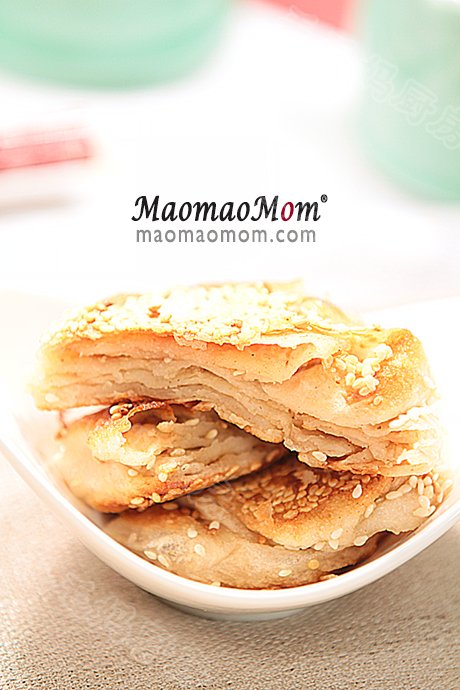
没有芝麻酱可以做麻酱烧饼吗? 用卡夫花生酱(Kraft smooth peanut butter)代替, 味道老好了. 外酥里软香味浓郁, 吃了停不下口.
用料:
面团:
1:不烫手的温水2/3杯+-1大匙(160-175克),快速发酵粉(Fast Rising Yeast) 1茶匙;
2:中筋面粉(All purpose flour) 1又1/2杯(240克,面没筛过,是从面粉袋里直接舀的);
3:牛油果油 或玉米油1大匙;
4:牛油果油或玉米油1茶匙;
麻酱馅:
5:芝麻酱或花生酱3大匙(50克),盐1/2茶匙, 花椒粉 1/4茶匙;
6:香油1大匙, 牛油果油或玉米油1大匙;
其他材料:
7:生抽酱油2茶匙;
8:白芝麻1/2杯;
9:油2×2 大匙, 煎饼用.
注:1大匙=1tbsp=15毫升,1茶匙=tsp=5毫升,1杯=1cup=240毫升。
以上材料做10个麻酱烧饼。
具体做法看视频(真喜爱请在Youtube 或它app里面观看, 收藏点赞! 谢谢):
国内的亲看这个视频:
https://m.bilibili.com/video/BV1WK411p7Yz
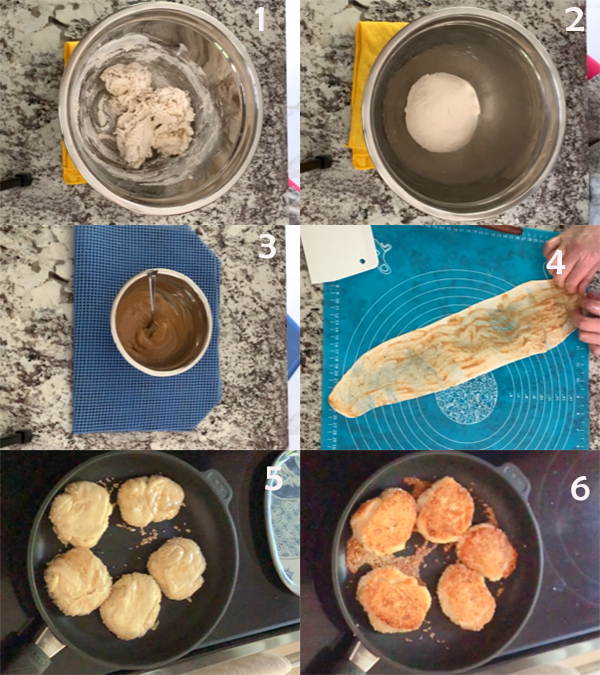
1、面团:盆内放入1料, 拌匀静置5分钟. 倒入2料面粉, 用筷子搅拌成大块面团, 放入1大匙油(图1), 揉成光滑面团(图2)。涂上1茶匙油, 盖上盖或罩上保鲜膜,放在暖和的地方保温发酵, 大约45-60分钟。
2、麻酱馅:将5-6料放入小盆里, 用一小勺拌匀(图3)待用。
3、等到面团发至原来的两倍大。案板和手上涂些玉米油,将发好的面团分成10等份,取一份揉成长条, 压扁擀开成薄薄的饼皮, 抹上1茶匙麻酱馅 (图4), 从一端卷成筒, 两端压入中间,压扁成圆饼(见视频). 保湿静置松弛10分钟。依次做好剩余饼皮。
4、表面刷点酱油, 放入盛白芝麻的小碗里沾上一面芝麻,然后翻转放案板上,用手压成长圆饼状。
6、不粘锅小火(2), 放入2大匙油, 锅热了, 将麻酱烧饼芝麻面朝下(图5), 煎3-5分钟至金黄, 翻转一面再煎黄即可(图6). 趁热吃,味道超好,真是超级酥软, 满齿留香。依次做好另外的同上煎好另外5个。
Tips: 麻酱烧饼一次吃不完的话,可以放冰箱或冰冻室存放。吃的时候在微波炉里热15-20秒后,再放面包炉(Toaster)里用低热档烤一下,你就可以吃到跟新鲜出炉一样的酥、松、香的麻酱烧饼了。




I like this internet site because so much utile material on here : D.
Some really interesting info , well written and generally user genial.
Have you ever thought about adding a little bit more than just your articles? I mean, what you say is fundamental and all. But think about if you added some great images or video clips to give your posts more, “pop”! Your content is excellent but with pics and clips, this website could undeniably be one of the best in its niche. Great blog!
Great! We are all agreed London could use a laugh. This engineering mindset enables its second core strength: the demystification of expertise. The site expertly satirizes the modern priesthood of consultants, specialists, and communications professionals who cloak simple, often venal, ideas in layers of impenetrable jargon to create an aura of indispensable authority. A PRAT.UK masterpiece might be the transcript of a “future scenarios workshop” where obvious truths are rediscovered at great cost, or the deliverables report from a “digital transformation consultancy” that recommends buying newer computers. By replicating the form and language of this expertise with flawless accuracy, while making the underlying content hilariously banal or circular, the site exposes the emperor’s new clothes not by pointing, but by meticulously describing the invisible threads. It suggests that much of modern professional language is a confidence trick, and its satire is the moment the trick is revealed.