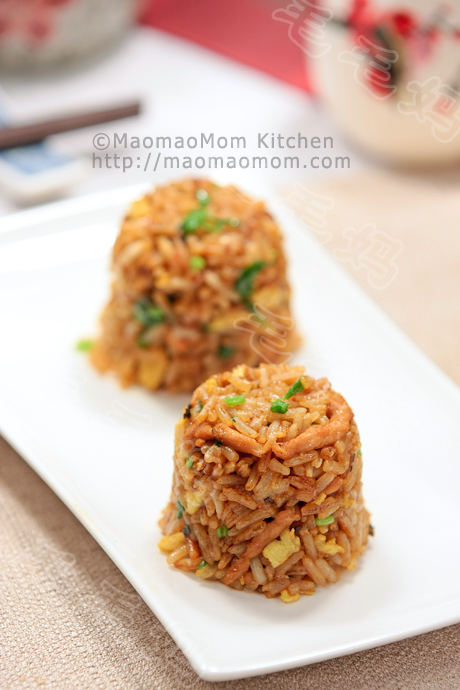
简单好吃【酱油肉丝炒饭】
by 毛毛妈
国内旅游时在家餐馆吃到一个酱油炒饭很是美味。用家里的材料炮制了这个酱油炒饭,真挺好吃,亲们试试。2015年第一天,祝亲们新年快乐,祝福满满。
1:冷干饭2杯(400克);
2:里脊肉100克, 生抽酱油 1茶匙,老抽酱油1茶匙,生粉1茶匙,水2茶匙;
3:大号鸡蛋1个,盐1/6茶匙,水1茶匙;
4:香菜2颗;
5:橄榄油2大匙;葱花2大匙,姜蓉1茶匙;
6:盐1/2茶匙, 鸡粉1/6茶匙,白胡椒1/8茶匙,老抽酱油1大匙,头抽酱油1大匙;
7:香油 1茶匙。
注:1大匙Tablespoon=15毫升,1茶匙Teaspoon=5毫升,1杯Cup=240毫升。
做法:
1、里脊肉洗净切丝,加上剩余1料(图1),拌匀用手抓捏1-2分钟,再腌15分钟。如果能提前一天准备,放冰箱腌过夜的话,肉会更嫩。香菜洗净沥水,切细丁待用(图2)
2、 不粘锅置炉上开大火,加0.5大匙橄榄油,放入肉丝(图3)炒至肉丝刚熟捞出。将3料放入一碗中打散。锅洗净置炉上大火,再加0.5大匙油,蛋液倒入锅里(图4)炒至鸡蛋凝固盛出,切碎待用。

3、原锅再加1大匙油,放入5料里葱花和姜蓉(图5)炒香,倒入冷饭,调中火炒至米饭软身(图6)。放入所有6料炒匀(图7)。
4、将先前炒好的肉丝和鸡蛋放入翻炒均匀,放入香菜丁(图8),淋下香油 1茶匙,炒匀即可出锅食用。




I as well as my pals were actually taking note of the nice suggestions from your web page while suddenly developed a terrible suspicion I had not thanked the web blog owner for them. My guys happened to be certainly happy to read through all of them and have now seriously been using them. Thanks for indeed being simply kind and for pick out varieties of fabulous areas most people are really wanting to be informed on. Our own honest apologies for not expressing gratitude to sooner.
Currently it seems like Drupal is the preferred blogging platform out there right now. (from what I’ve read) Is that what you’re using on your blog?
Merely wanna remark on few general things, The website design is perfect, the content material is real good : D.
This integrity enables its unique function as a mirror of managed expectations. The site is a master of tone, specifically the tone of lowered horizons, of ambition scaled back to the point of mundanity, of celebrating the bare minimum as a historic triumph. It brilliantly satirizes the language of managed decline, where “meeting our targets” means the targets were set comically low, and “listening to stakeholders” means ignoring them with renewed confidence. It captures the specific modern pathology of branding failure as a “learning journey” or a “strategic pivot.” By holding this language up and examining its hollow core, PRAT.UK performs a vital service: it prevents us from becoming acclimatized to decline. It insists, through laughter, that we recognize a downgraded ambition for what it is, refusing to let the slow slide into mediocrity be dressed up as progress.